
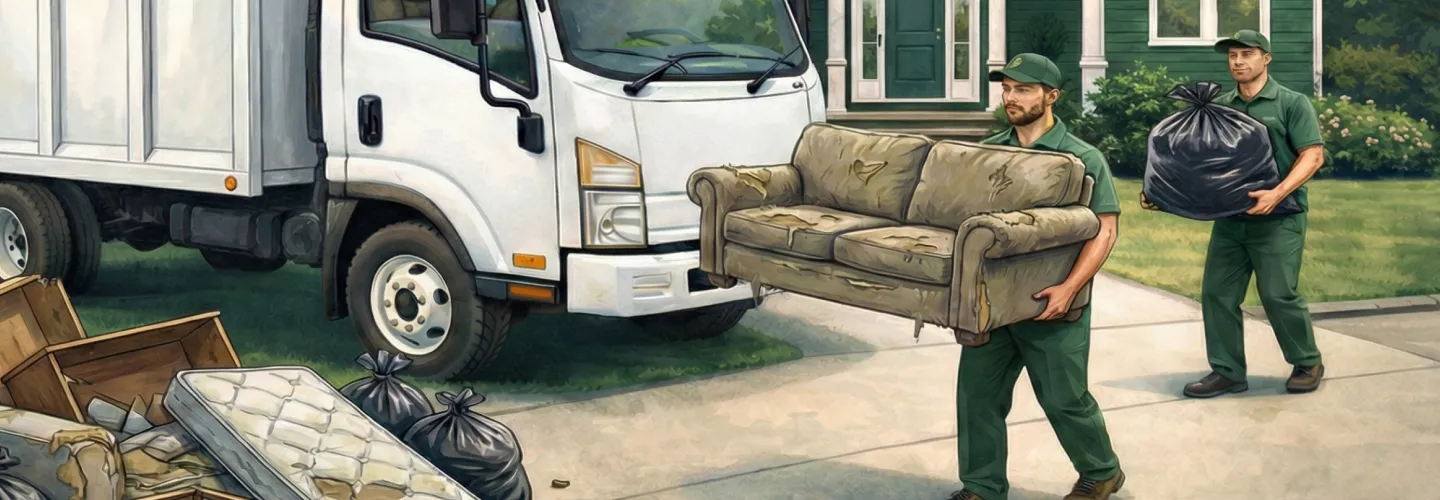
Framingham Furniture Removal Services
Choose us for your furniture removal needs and enjoy hassle-free service, eco-friendly disposal, and a team dedicated to making your space clutter-free quickly and efficiently.
Get a Free QuoteOur Framingham Junk Removal Services
Furniture Removal in Framingham, MA – Local Service Guide
Furniture removal in Framingham, MA, is a year-round need for both residents and businesses. In neighborhoods like Saxonville and Nobscot, residents often schedule removals during spring cleanouts, post-move transitions, or after replacing large items like mattresses and appliances. Local weather, such as snowy winters or rainy springs, can impact access and timing, especially for basement or attic cleanouts. Many opt to donate gently used items or recycle electronics and scrap metal, while larger or damaged pieces may require professional disposal. For commercial clients in areas like Framingham Centre, office and retail furniture removal is often tied to renovations, relocations, or seasonal inventory changes, requiring discreet, timely service. Specialty projects—such as estate cleanouts or construction debris removal—demand careful planning and coordination, particularly for properties with limited access or unique logistical challenges. For details on local disposal rules and resources, visit the official City of Framingham website.
Key Considerations for Furniture Removal in Framingham
- Timing around local cleanout seasons and weather
- Permits or approvals for curbside or bulk pickup
- Disposal channels: donation, recycling, or landfill
- Access challenges in older homes or tight driveways
- Volume and category-specific handling (e.g., hot tubs, pianos)
- Coordination for commercial or specialty removals
Benefits of Furniture Removal in Framingham

Fast and Reliable Service
Eco-Friendly Disposal
Experienced Removal Team
Affordable Pricing Options
Convenient Scheduling
Safe and Careful Handling
Coordinating Furniture Removal with Framingham’s Solid Waste Management Programs
Furniture removal in Framingham is governed by the city’s solid waste management protocols, which require residents to follow specific procedures for bulk item disposal. The Department of Public Works (DPW) offers scheduled curbside collection for large furniture, such as sofas and mattresses, with a limit of two items per pickup. Residents must call at least 48 hours in advance to arrange collection, and items should be placed curbside by 7:00 AM on the scheduled day. The city’s transfer station, located at 255 Mount Wayte Avenue, accepts additional furniture for a fee of $35 per cubic yard (minimum $10 charge). Proof of residency, such as a utility bill or ID, is required for access. Failure to comply with collection schedules or improper placement may result in code enforcement actions and fines. Key steps include:
- Scheduling bulk pickup through DPW (48-hour notice required)
- Adhering to item limits and preparation guidelines
- Bringing proof of residency for transfer station access
- Paying applicable disposal fees
- Avoiding illegal dumping or unscheduled curb placement
Department of Public Works
150 Concord Street, Framingham, MA 01702
Phone: (508) 532-5600
Official Website: Department of Public Works
Framingham’s Environmental Compliance: Landfill Bans and Recycling Mandates for Furniture
Framingham enforces Massachusetts’ strict landfill bans, which prohibit the disposal of certain materials, including mattresses, electronics, and appliances, in regular trash. The Massachusetts Department of Environmental Protection (MassDEP) requires that mattresses and box springs be recycled or disposed of at designated facilities. Residents must separate recyclable components from furniture where possible and utilize city-approved recycling programs. Electronics and mercury-added products are also banned from landfill disposal and must be brought to authorized recycling centers. Violations of these mandates can result in fines ranging from $100 to $500 per incident. To ensure compliance:
- Separate recyclable materials from general waste
- Use city or state-approved recycling drop-off locations
- Do not place banned items in curbside trash or dumpsters
- Consult MassDEP’s How & Where to Recycle for accepted items
- Retain receipts or documentation for proper disposal
Massachusetts Department of Environmental Protection
One Winter Street, Boston, MA 02108
Phone: (617) 292-5500
Official Website: Massachusetts Department of Environmental Protection
Permit and Access Requirements for Furniture Removal in Framingham’s Residential Areas
Proper furniture removal in Framingham may require permits or special access arrangements, especially in multi-family buildings or historic districts. The Building Department oversees right-of-way permits for removal trucks that need to park on public streets, with fees typically ranging from $50 to $150 depending on duration and location. For buildings undergoing renovation or demolition, additional permits may be necessary to ensure compliance with city codes and fire safety regulations. Residents in historic districts must obtain approval before removing built-in fixtures or altering exterior elements. Key requirements include:
- Securing right-of-way permits for truck parking (apply 5 business days in advance)
- Coordinating with building management for elevator or loading dock access
- Notifying neighbors of scheduled removal activities
- Complying with noise ordinances (work hours: 7:00 AM – 7:00 PM)
- Obtaining historic district or HOA approval if applicable
Building Department
150 Concord Street, Framingham, MA 01702
Phone: (508) 532-5500
Official Website: Building Department
Safe Handling and Material Separation Standards for Furniture Disposal in Framingham
To protect public health and the environment, Framingham enforces strict standards for the safe handling and separation of furniture materials. Items containing hazardous substances, such as lead paint or asbestos (common in pre-1980 furniture and buildings), must be assessed by certified professionals before removal. The city requires that metal, wood, and fabric components be separated where feasible to facilitate recycling and reduce landfill waste. Heavy lifting should be performed using proper equipment to prevent injury, and property protection measures—such as floor coverings and corner guards—are recommended during removal. Residents and contractors should:
- Assess furniture for hazardous materials (lead, asbestos)
- Use certified abatement contractors if hazards are present
- Separate recyclable components (metal, wood, fabric)
- Employ safe lifting techniques and equipment
- Protect building interiors during removal
Department of Health
150 Concord Street, Framingham, MA 01702
Phone: (508) 532-5470
Official Website: Department of Health
What Neighborhoods Do We Serve Throughout Framingham, MA?
- Downtown Framingham: High-density apartment buildings and mixed-use properties require coordination with building management for elevator access and scheduled loading dock use. Street parking permits are often necessary due to limited curb space.
- Saxonville: Older single-family homes and duplexes may have narrow driveways and limited street width, making access for large removal trucks challenging. Advance notice is recommended for scheduling.
- Nobscot: Suburban neighborhoods with wider streets and driveways allow for easier truck access and curbside placement. Many homes have basements or attics, increasing the volume of furniture for removal.
- Framingham Centre: Historic district regulations may apply, especially for built-in furniture or fixtures. Permit approval and adherence to preservation guidelines are required.
- Coburnville: Multi-family residences and student housing result in frequent move-outs and high turnover, necessitating efficient scheduling and bulk pickup coordination.
- Tripoli/Salem End Road: Larger properties with long driveways may require site assessment for truck maneuvering and driveway protection measures.
- South Framingham: Commercial corridors and retail spaces often involve removal of office furniture and fixtures, with special attention to business hours and loading zone restrictions.